Brush, bramble and saplings
Remote control brush mower
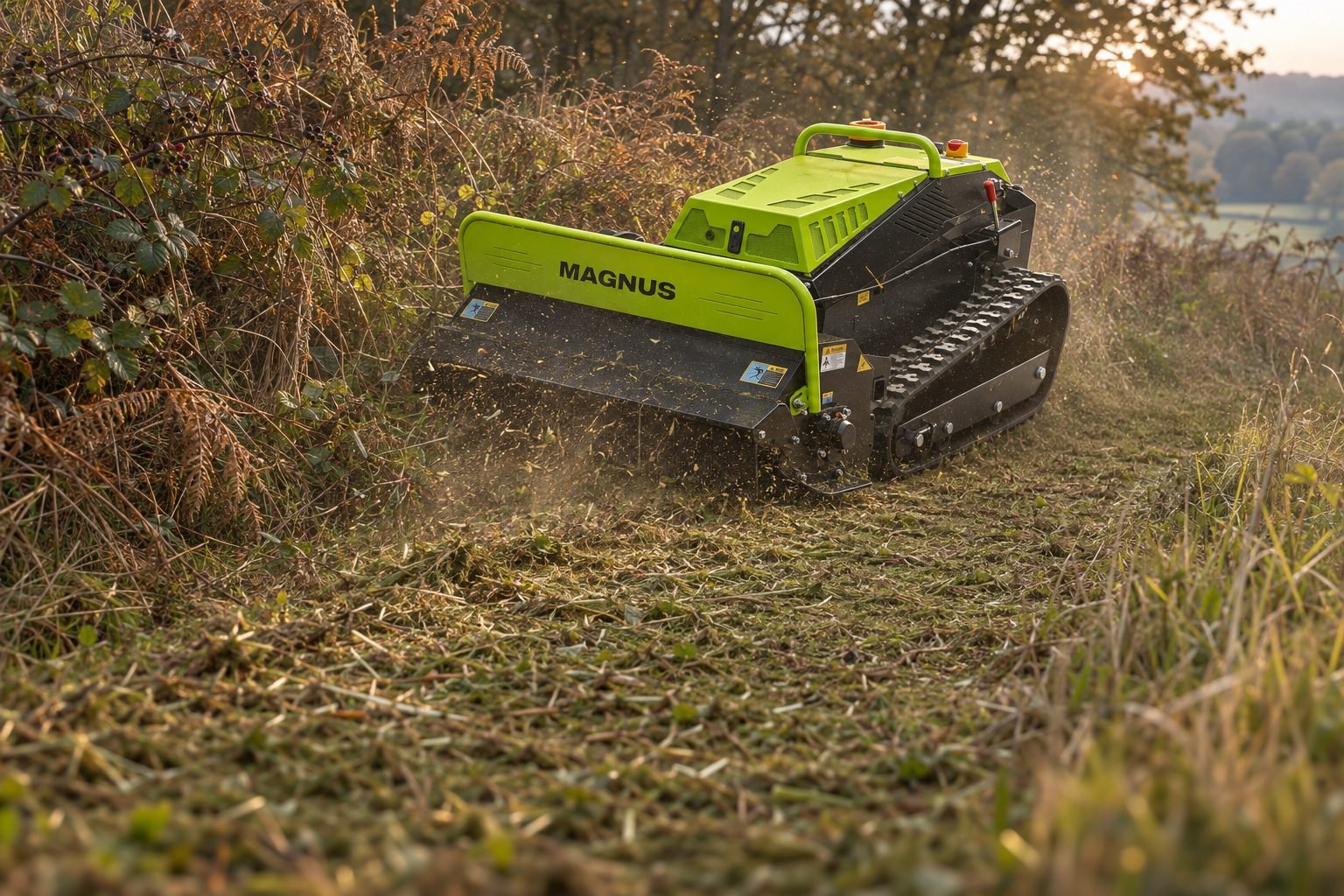
A brush mower is judged on what it leaves behind, not on what it can touch. MAGNUS builds three flail decks that take standing growth up to 3 m — 800 mm and 1,000 mm, 54 and 66 blades — on a tracked chassis rated to 45°, with the operator standing on level ground.
What a brush mower actually has to cut
Four kinds of growth break machines in four different ways. A deck that survives one will not necessarily survive the next, which is why the honest question is not “how thick will it cut” but “what is on the ground”.
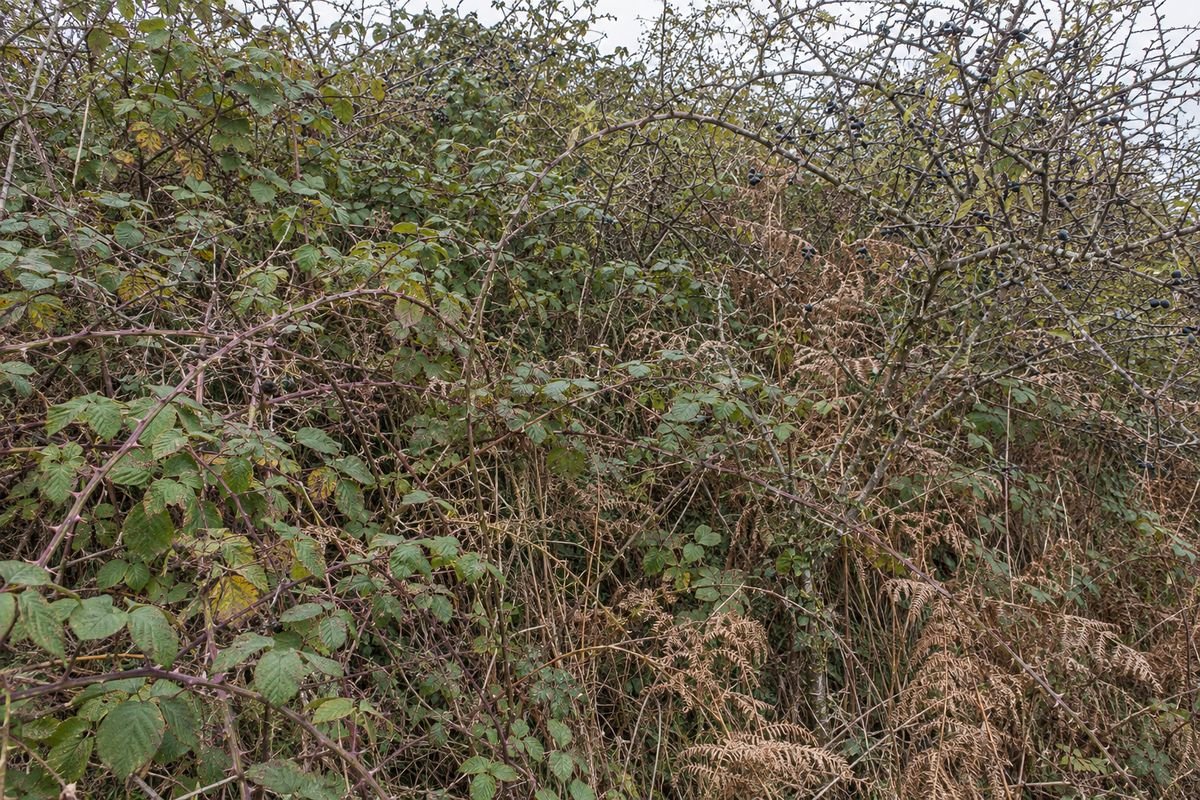
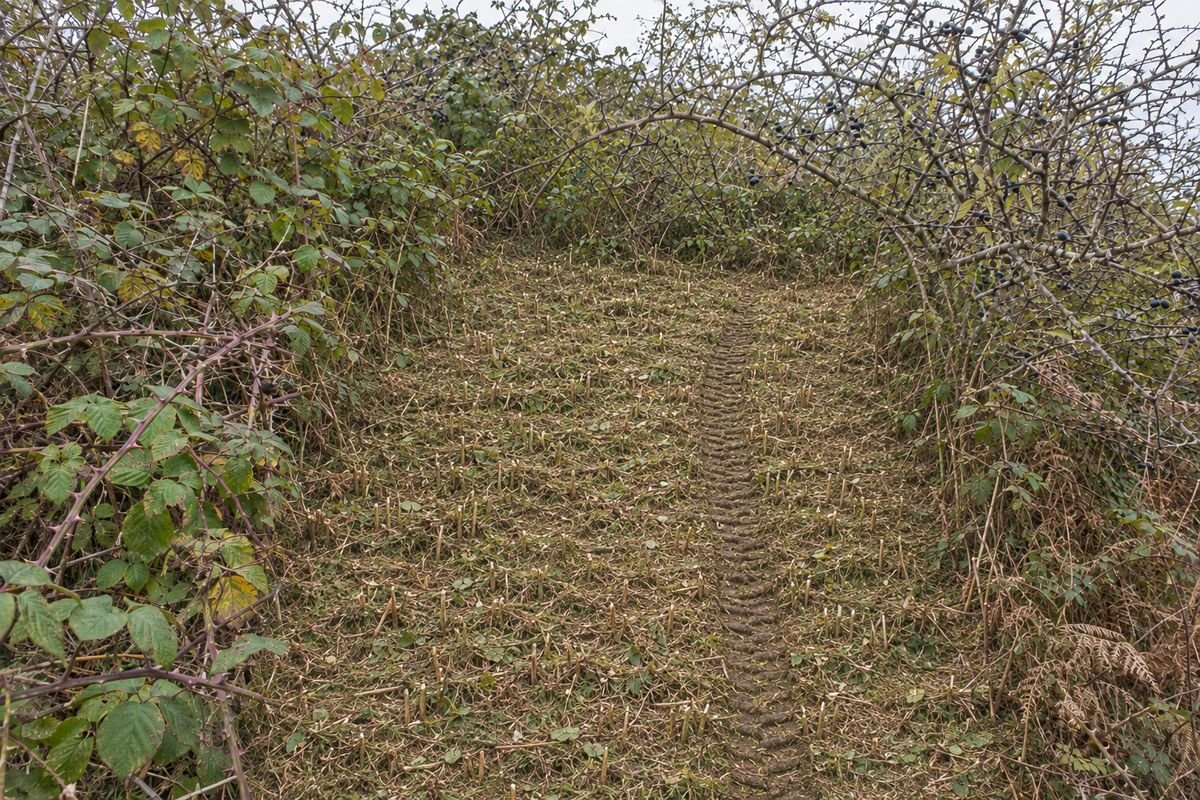
Bramble and blackthorn. Recumbent, woody and springy. Cut it and the arc springs back into the deck. Long canes wrap a spindle in seconds. This is the growth that needs a flail rotor with a fixed counter-blade rather than a single swinging blade, because the counter-blade shears what the rotor drags in instead of relying on impact.
Gorse and broom. Dense, oily and stiff enough that a rotary blade skips over the top of it. A flail chops it down and leaves it as mulch rather than as a mat of stalks that has to be raked off afterwards.
Saplings and regrowth. The limit here is stem diameter, not height. On these decks it is 40 mm. A machine that handles three metres of standing bramble will not fell a tree, and any supplier who implies otherwise is selling you a return visit.
Reed, bracken and rank grass. Tall, fibrous and wet at the base. It wraps, it stalls a deck set too low, and it comes back. Cut it high on the first pass and low on the second, which is why cut-height range matters more than blade count on this ground.
The five decks that do brush work
Two rotor families, one control platform. Every model uses the same 2.4 GHz proportional handset and the same 200–500 m radio link.
| Model | Cut width | Blades | Cut height | Weight | Engine | Power |
|---|---|---|---|---|---|---|
| MA-80-1 | 800 mm | 54 | 20–250 mm | 315 kg | Loncin 420 cc | 14 hp |
| MA-80-SA | 800 mm | 54 | 20–200 mm | 320 kg | Loncin 459 cc | 14 hp |
| MA-100 | 1,000 mm | 66 | 20–250 mm | 360 kg | Loncin 459 cc | 16 hp |
| MA-100-1 | 1,000 mm | 66 | 20–250 mm | 360 kg | Loncin 459 cc | 16 hp |
| MA-100-2 | 1,000 mm | 66 | 10–300 mm | 355 kg | Loncin 459 cc | 16 hp |
The MA-50P and MA-80P are two-blade rotary decks built for maintained grass, not brush. If that is the choice you are weighing, read flail vs rotary mower first.
Which of the five fits your ground
Blade density on these decks is almost identical: 54 blades on an 800 mm rotor is 67.5 blades per metre, and 66 blades on a 1,000 mm rotor is 66 per metre. So the mulch quality barely changes between them. What changes is width, weight and cut-height range — and those are decided by the site, not by the brochure.
The MA-80-SA carries the same 54-blade deck as the MA-80-1, but sits lower and wider on its tracks. That is the version for banks above 30° where the machine is working across the face rather than up it.
The MA-100-2 adds hydraulic lift and a 10–300 mm cut range. On rank reed and bracken that range is worth more than the extra 200 mm of deck, because it lets you take the first pass high and come back low without changing anything on the machine.
Brush mower, brush cutter or forestry mulcher
Three different machines that get sold under one word. Buying the wrong one is the most common expensive mistake in this category.
| Remote control brush mower | Handheld brush cutter | Forestry mulcher | |
|---|---|---|---|
| What it cuts | Grass, bramble, gorse, regrowth, standing growth to 3 m | Grass, bramble, light stems | Trees and scrub, including trunks |
| Where the operator is | On level ground, 200–500 m away | Carrying the machine | In a cab, or on the bank |
| Slope it works | Rated to 45°, all directions | Operator-limited, around 30° | Machine-limited, usually well under 30° |
| What it leaves | Mulched, discharged down and back | Ragged, windrowed to one side | Coarse shred, spread wide |
| Ground it needs | Anything the tracks can bite | Footing for one person | Firm, and wide enough to turn |
| Cost band | Middle | Lowest | Highest |
The dividing line is not power, it is whether anyone has to stand on the slope. A handheld cutter with more horsepower than our deck still stops being an option the moment the ground reaches the angle where a person cannot keep their feet.
What it will not do
Five limits, stated plainly, because they decide whether this is the right machine for you.
| Limit | What it means in practice |
|---|---|
| It is not a forestry mulcher | Stem diameter is the limit, not height. Saplings and regrowth yes; established trees no. Ask for the rated stem diameter on the model you shortlist and hold us to it. |
| It needs ground the tracks can bite | Rock, loose scree and wet clay are traction problems, not power problems. A 45° rating is a dry-ground figure. |
| It will not leave a lawn finish | A 66-blade flail mulches. It does not stripe, roll or vacuum. If the customer is judging the result against a cylinder mower, they are buying the wrong machine. |
| It will not clear a mat of old cut growth | Lying brash and three-year-old bramble beds need the deck set high and a second pass. One pass over a matted bed leaves lengths behind. |
| It will not run all day on one tank | The 459 cc models carry 6.5 L. Brush work is heavy load, so plan refuelling around the job rather than around the tank figure. |
Blades are the consumable, not the machine
On brush ground the blades take the wear. Fifty-four or sixty-six of them, each swinging free on its own mount, so a strike on stone costs one blade rather than a rotor. That is the whole reason the deck is built this way: the part that hits the rock is the part that is cheap to replace.
A dealer stocking these machines should hold blades for the deck family they sell, plus drive belts, filters and track tensioners. On a brush contract, blades are a scheduled cost, not a breakdown.
If you are specifying a machine for a council or a contractor, put the blade cost per hectare in the tender response. It is the number that decides whether the machine looks cheap or expensive three years in.
Brush mower questions
What is the thickest stem a remote control brush mower will cut?
Stem diameter is a separate rating from standing height, and it is the figure that decides whether a machine is right for regrowth or only for grass and bramble. We quote it per model on the data sheet rather than as one number for the range, because a 54-blade 800 mm deck and a 66-blade 1,000 mm deck are not the same tool. Tell us the ground and we will tell you which deck is rated for it in writing.
Will it clear bramble that has been left for three years?
Yes, but not in one pass at a low cut height. Old bramble forms a mat of dead cane under the new growth, and a deck set low drags that mat instead of cutting it. The method that works is a first pass at 150–250 mm to take the standing growth down, then a second pass lower once the mat has been broken up. The MA-100-2 covers that range in one machine, which is why it is the deck we quote most for neglected ground.
Does a flail mulch the cuttings or leave them in rows?
It mulches, and it discharges down and back under the deck rather than throwing material sideways out of a chute. On a verge beside a road, under a solar array or along a fence line, that is the difference between a finished job and a cleanup operation. The trade-off is that mulched material stays on the ground, which is usually what you want on a bank because it holds moisture and slows regrowth.
How often do the blades need replacing on brush work?
It depends on how much stone is in the ground, not on the hours. Blades wear at the tip and lose their edge long before they fail, and the symptom is a ragged cut and higher load on the engine rather than a sudden stop. On clean ground a set lasts a season; on stony verge work it will not. This is why the blades are individually mounted: you replace the ones that are worn, not the set.
Can it work a 45° bank in wet weather?
The 45° rating is a dry-ground figure and it applies in all directions, which is unusual in this category. Wet clay is a traction limit rather than an angle limit, and no tracked machine keeps its grip on saturated clay at that angle. If your site is wet for part of the year, say so at quotation stage and we will talk about track pattern and about which model carries its weight lower, which is what the MA-80-SA is for.
Can I run it out of sight of the operator?
The handset is rated for 200–500 m depending on terrain and obstructions, and it is a proportional joystick rather than a switch, so control is continuous. Working out of line of sight is a site risk assessment question, not a radio question: on a bank you can see the machine from below, on a wooded site you cannot. A range extender is available for sites where the operator needs to stay further back.
What does a remote control brush mower cost?
We quote per order rather than publishing a list price, because deck width, engine, radio package and freight terms move the number more than the model does. Send your market, the ground you are cutting and the volume you expect, and you get FOB Qingdao, CIF and DDP side by side so the landed cost is visible before you commit. Dealers ordering a single demonstrator unit get the same quotation treatment as a container order.
Is it available under our own brand?
Yes. Colour, decal and manual can carry your label, and a colour and decal change does not require new tooling. Dealers in the UK, Ireland, Australia, Spain and the Nordics already sell the machine under their own names. Specification changes — deck, engine, radio — are a separate conversation and depend on volume.
Tell us the ground, we will name the deck
Send a photo of the site and the slope angle if you know it. You get a model recommendation, the cut-height setting to start at, and FOB, CIF and DDP pricing for that machine — normally within one working day.