CE Marking for Remote Control Mowers
CE Marking for Remote Control Mowers
Four directives apply to a remote control mower, not one. What a European buyer will ask for, and where imports most often fail the document check.
CE marking is the first thing a European dealer asks about and the last thing most Chinese suppliers can explain properly. A machine can carry the mark and still fail a buyer’s document check, because the mark is the end of a process, not a sticker you buy.
This page sets out what a remote control mower actually needs to be placed on the EU market, what documents a buyer will ask to see, and where imports most often go wrong.
Four directives, not one
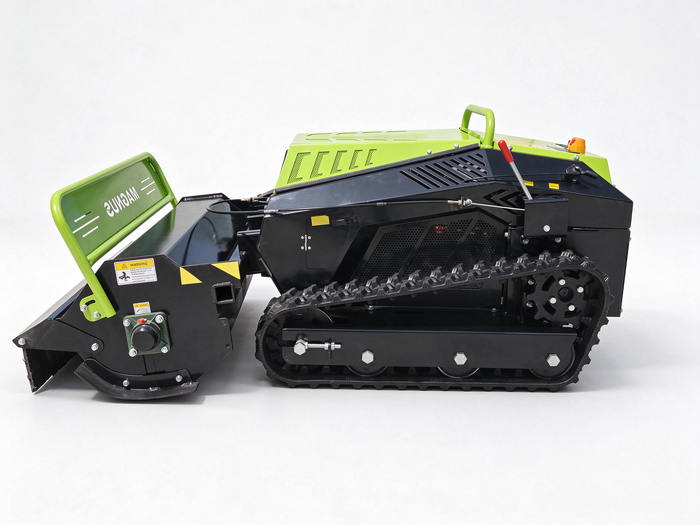
A remote control mower is not covered by a single piece of legislation. Four apply at the same time, and suppliers routinely certify only the first.
| Legislation | What it covers | Commonly missed? |
|---|---|---|
| Machinery Directive 2006/42/EC | The machine itself: mechanical hazards, guards, controls, stability | No, this is the one everyone does |
| EMC Directive 2014/30/EU | Electromagnetic emissions and immunity | Sometimes |
| Radio Equipment Directive 2014/53/EU | The remote control handset and its radio link | Frequently |
| Outdoor Noise Directive 2000/14/EC | Guaranteed sound power level, marking and declaration | Frequently |
The Radio Equipment Directive is the one that catches buyers out. A mower with a wireless handset contains radio equipment, and that equipment needs its own conformity assessment and its own declaration. Suppliers who treat the handset as an accessory are leaving a gap the buyer’s compliance officer will find.
The Outdoor Noise Directive is the second. Lawn mowers fall within its scope, which means a guaranteed sound power level must be measured, marked on the machine, and stated in the declaration. A CE certificate without a noise value is incomplete for this product category.
What changes in 2027
The Machinery Directive is being replaced by the Machinery Regulation (EU) 2023/1230, which applies from 20 January 2027. The regulation tightens requirements around digital and autonomous functions, directly relevant to remote-controlled and semi-autonomous equipment.
For buyers placing orders that will be delivered after that date, it is reasonable to ask whether the technical file is being prepared against the regulation rather than the outgoing directive.
The document package a buyer will ask for
These are the documents a European dealer typically requests before listing a machine. If any is missing, the conversation usually stops.
- EU Declaration of Conformity: signed, naming the manufacturer, the machine, the directives applied, the standards used, and the authorised representative in the EU if the manufacturer is outside the union
- Technical file: risk assessment, drawings, circuit and hydraulic diagrams, calculation notes, test reports
- Risk assessment to EN ISO 12100: the horizontal standard for machinery risk assessment
- EMC test report: emissions and immunity
- Radio test report: for the handset and receiver
- Noise measurement report: sound power level, with the guaranteed value
- Operating instructions: in the language of the destination country
- Nameplate and marking artwork: CE mark, model, serial, year of construction, sound power value
Note item 1: a manufacturer outside the EU must have an authorised representative established in the union for the Machinery Directive. This is not optional, and a dealer cannot act as one for the purposes of the directive.
Where imports actually fail
Failures are rarely about the machine. They are about paper.
- The declaration names the wrong legal entity. The manufacturer on the declaration must match the manufacturer on the nameplate and the commercial invoice.
- Instructions in English only. Each member state can require its own language.
- No noise value. The machine carries a CE mark but no guaranteed sound power level, which makes it incomplete for outdoor equipment.
- Handset not covered. Radio equipment without its own conformity assessment.
- Technical file does not exist. The certificate exists but the underlying file was never assembled, so it cannot be produced on request.
Any of these can result in the machine being held at customs or withdrawn from sale, and the cost falls on the importer, which is why experienced dealers ask for the full package before the first order, not after.
Questions worth asking any supplier
- Which legal entity signs the Declaration of Conformity, and does it match the nameplate?
- Is the radio handset covered by its own RED assessment?
- What is the guaranteed sound power level, and where is it marked?
- Who is your authorised representative in the EU?
- Can you send the technical file index, not just the certificate?
- Is the file being prepared against 2006/42/EC or 2023/1230?
A supplier who can answer all six is a supplier who has done this before. One who cannot is a supplier whose buyer will discover the gap at the port.
Frequently asked questions
Is a CE certificate the same as CE marking?
No. CE marking is a self-declaration process supported by a technical file; a certificate from a notified body may form part of that evidence but does not replace the declaration or the file. For machinery, most categories are self-certified. There is no single “CE certificate” issued by an authority.
Does a remote control mower need a notified body?
Generally not for the machinery directive itself, since lawn and grounds equipment is not in the annex IV list. Radio equipment assessment may involve a notified body depending on the route taken.
Can the importer put their own CE mark on it?
Only if they take on the manufacturer’s obligations in full, including the technical file. Importers who simply add a sticker without that are exposing themselves, not the supplier.
Ask for the document package
We can send the Declaration of Conformity, the noise value, the EMC and radio reports, and the technical file index for any model in the range. Tell us the destination country and we will confirm which language versions and which representative arrangements apply.
Related guides
Read next
Tracked mower track tension: how to read the wear
How to check tracked mower track tension by hand, what a slack track sounds like, and the wear pattern that…
When to sharpen remote control mower blades
How to tell a dull blade from a damaged one, the three signs a remote control mower blade is past…
Tracked or wheeled: which mower actually holds a slope
Tracks and wheels fail in different ways. What a wheel does on a bank, what a track does instead, and…
Send the slope. We will confirm the model.
Tell us the gradient, the area and the nearest port. We reply with a model and a landed cost within one business day.